Shipwreck of the Reporter
March 13, 1902
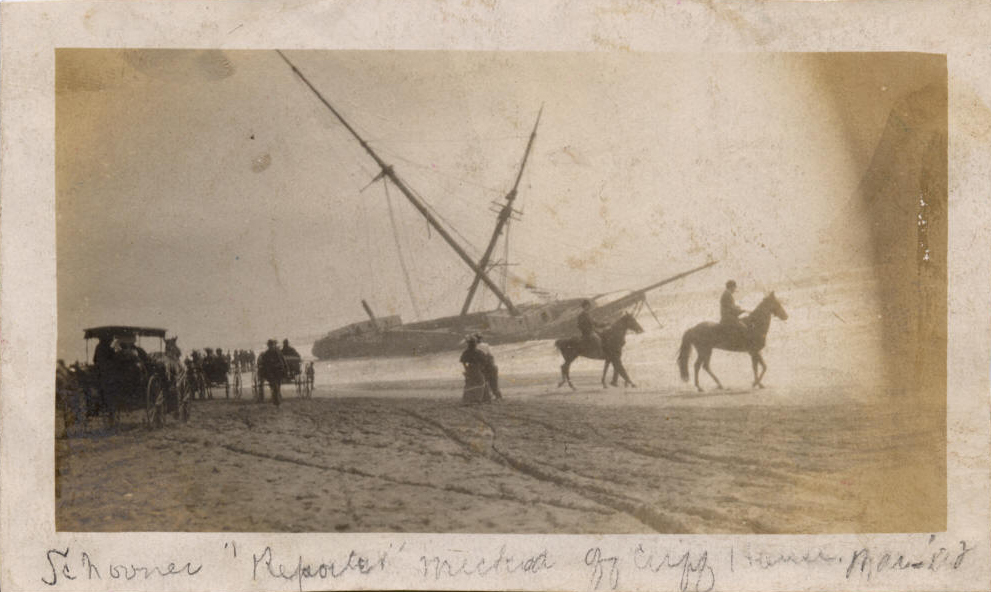 "Schooner Reporter wrecked off Cliff House, March '02" (WNPCHP)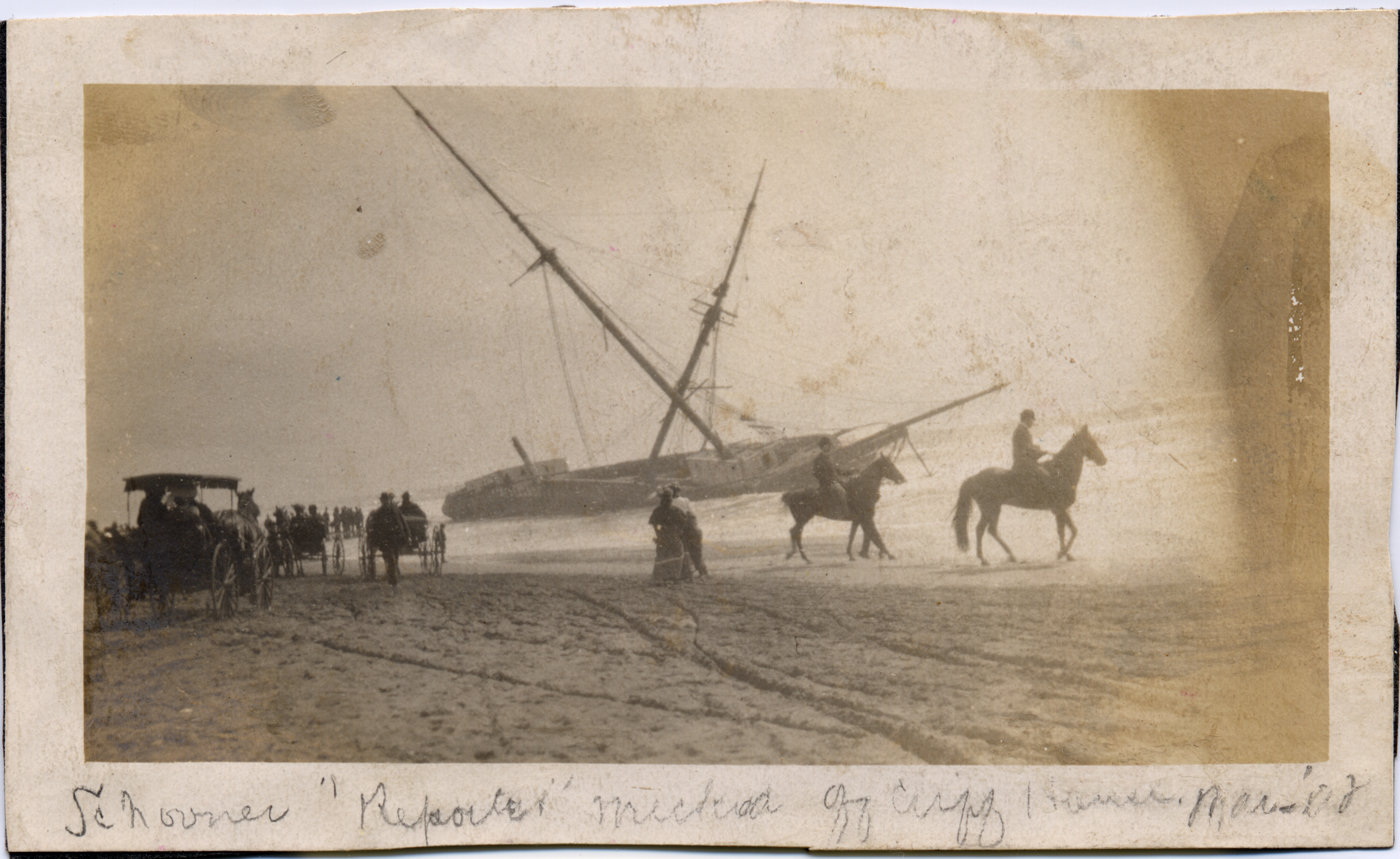
Reporter Shipwreck
Photographer Unknown (Marilyn Blaisdell Collection / Courtesy of Molly Blaisdell)
|


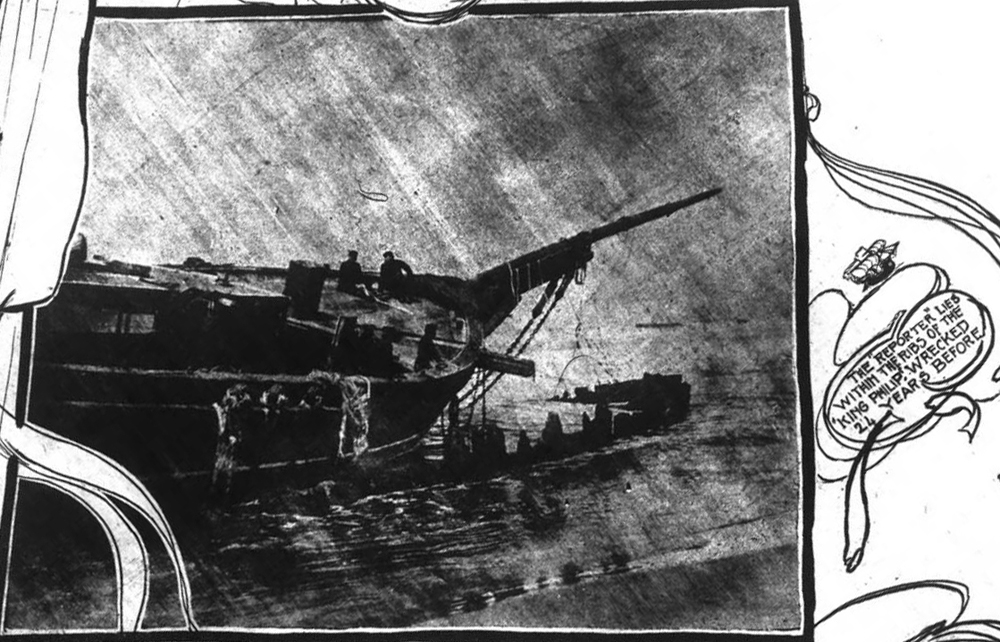
San Francisco Chronicle - May 11, 1902
"The Reporter lies within the ribs of the King Philip, wrecked 24 years
before"
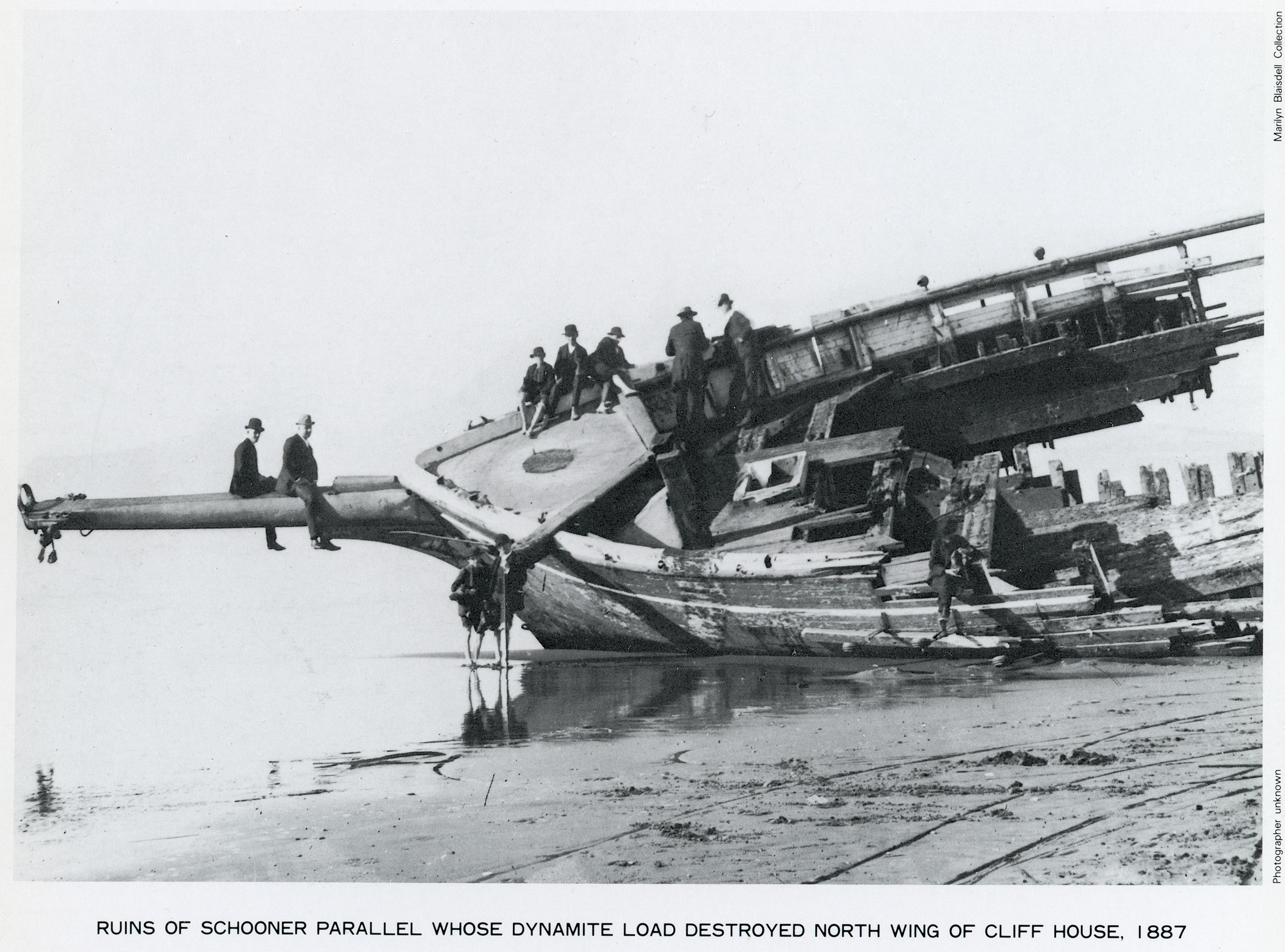
"RUINS OF SCHOONER PARALLEL WHOSE DYNAMITE LOAD DESTROYED NORTH WING OF CLIFF
HOUSE, 1887"
Source: San Francisciana, Photographs of the Cliff House - Marilyn
Blaisdell
NOTE: The Daily
Alta California from Jan 17 1887 (link) suggest that nothing this large survived.
Other researchers believe this is a photo of the Reporter, not the Parallel.
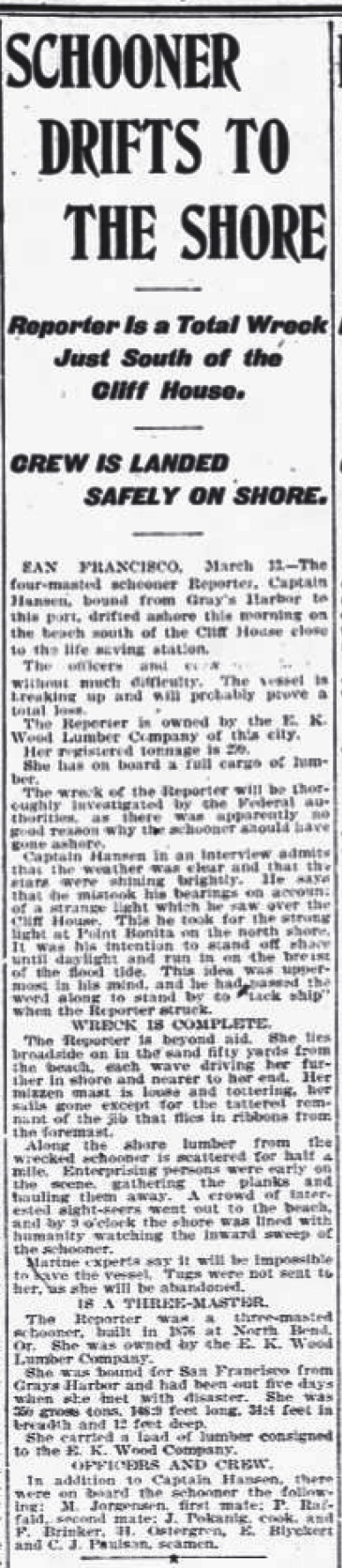
Oakland Tribune - Mar 13, 1902
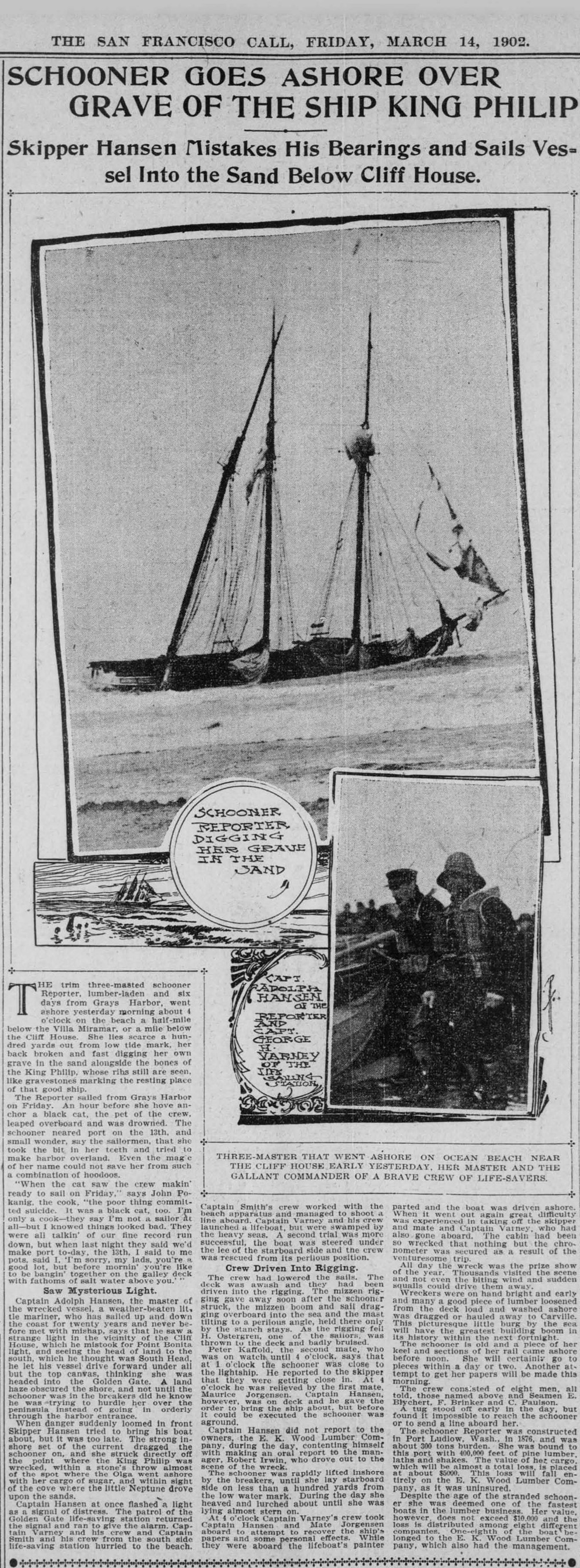 San Francisco Call, Friday, March 14, 1902
The San Francisco Examiner - Mar 14 1902 (pdf)
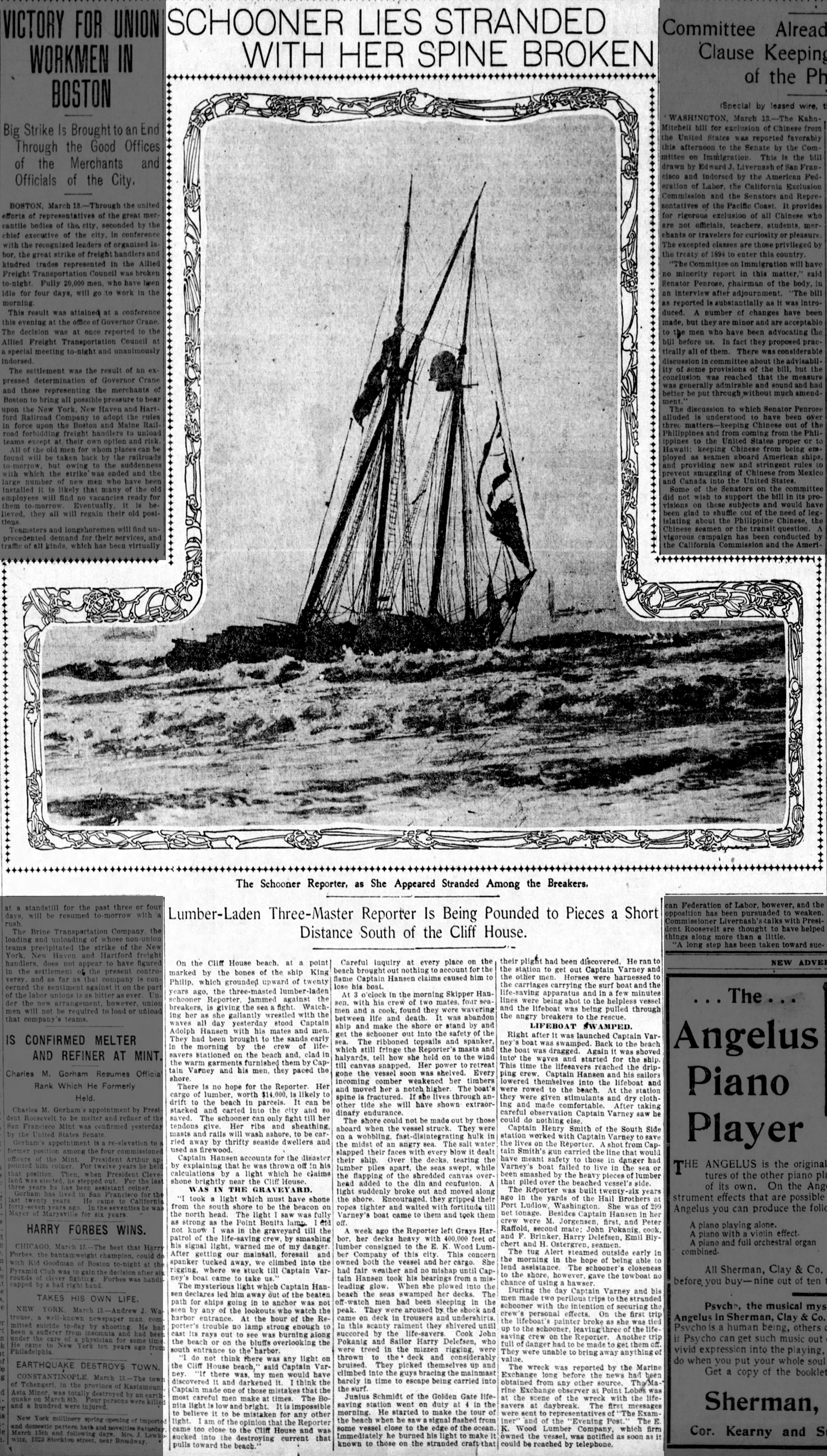
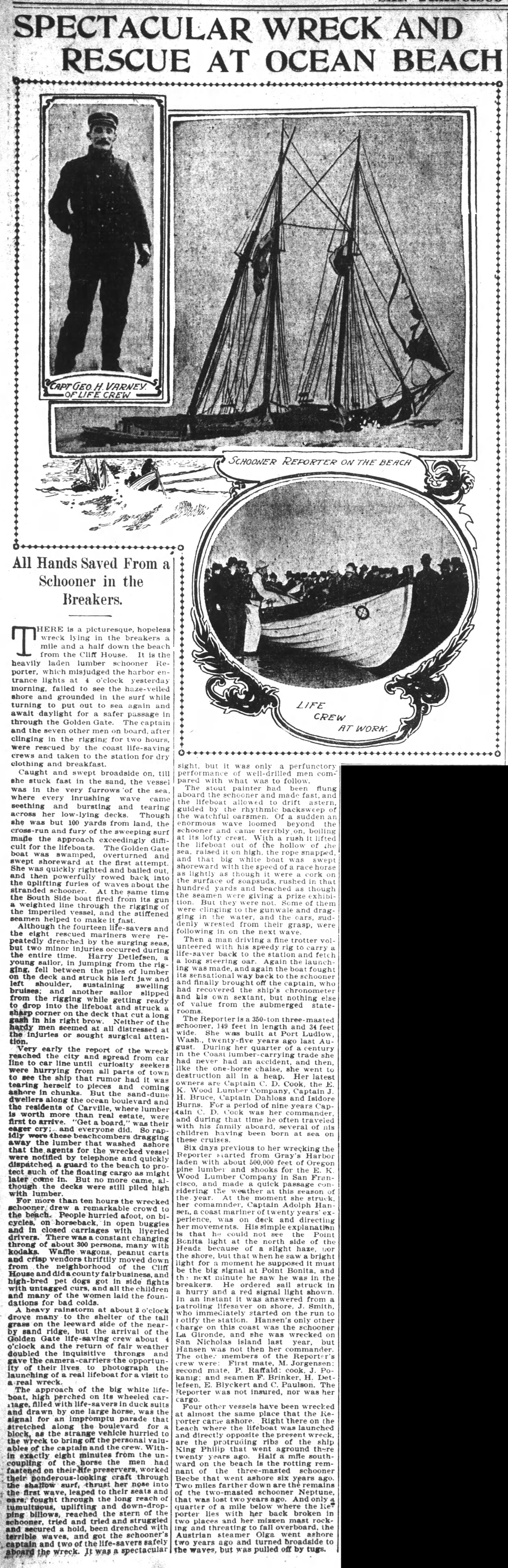 San Francisco Chronicle - March 14, 1902
(click image for full size)
San Francisco Chronicle - March 14, 1902
(click image for full size)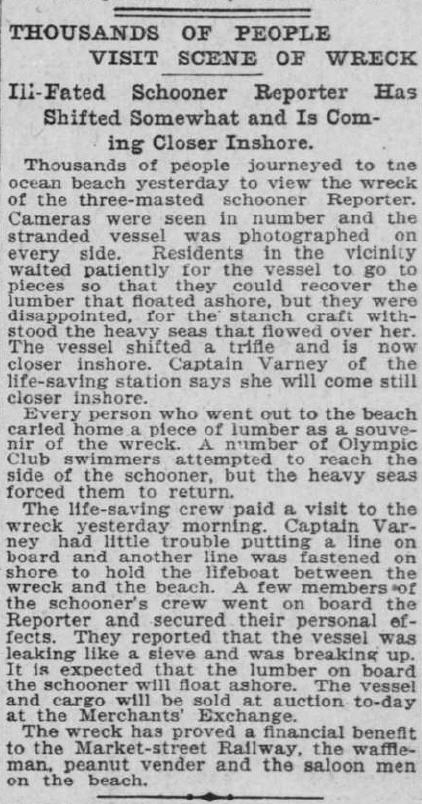 San Francisco Call, Friday, March 15, 1902
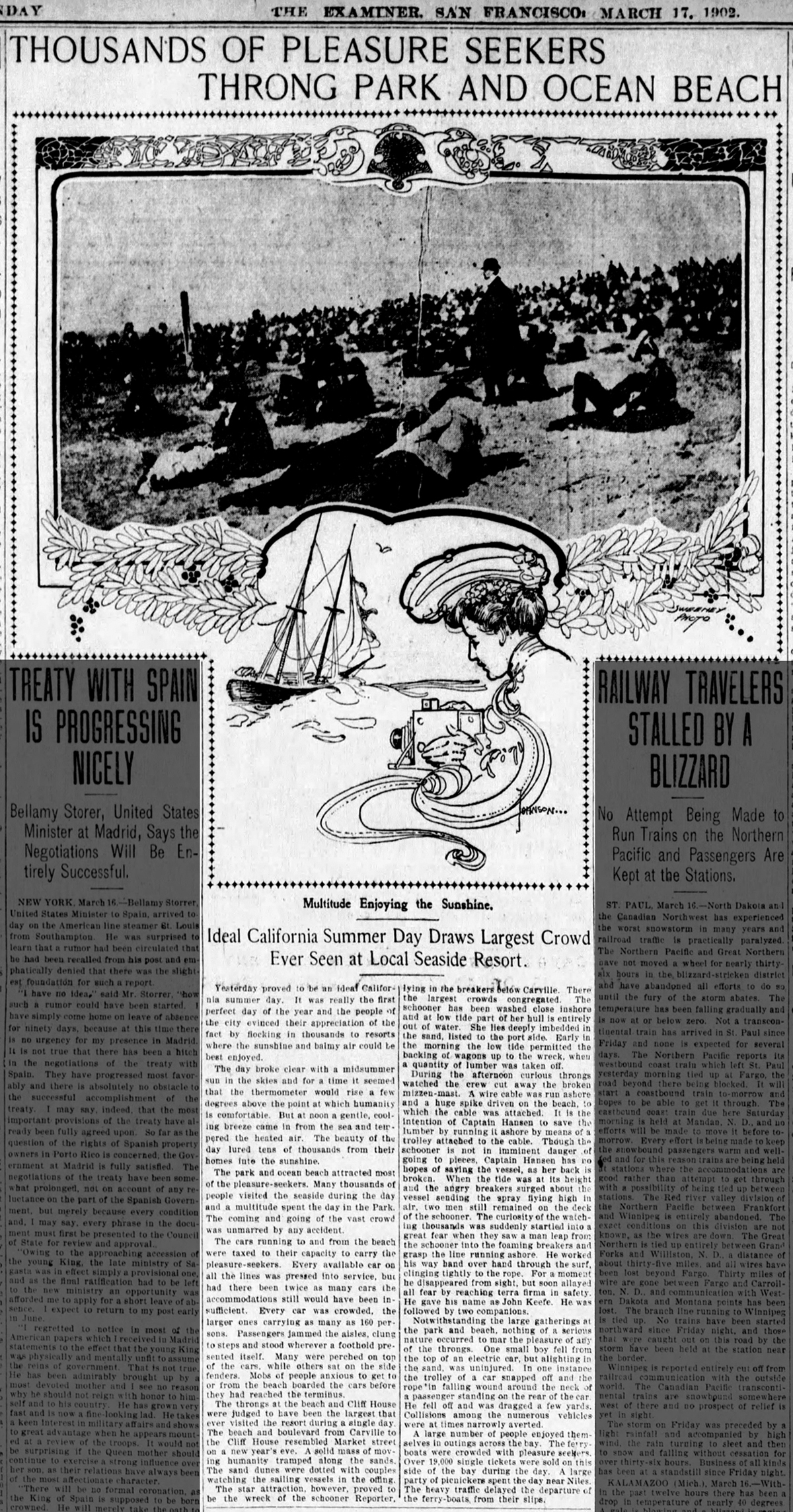 The San Francisco Examiner - Mar 17 1902
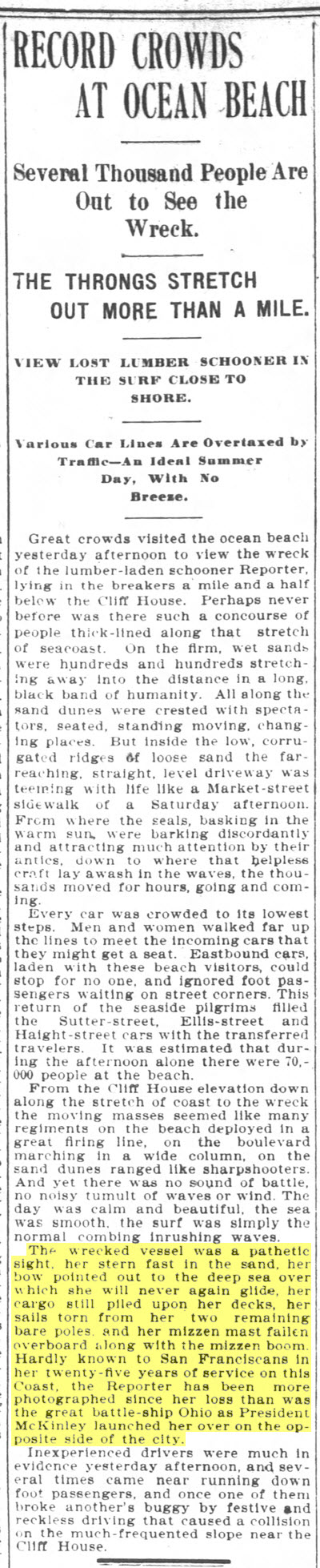 San Francisco Chronicle - Mar 17, 1902
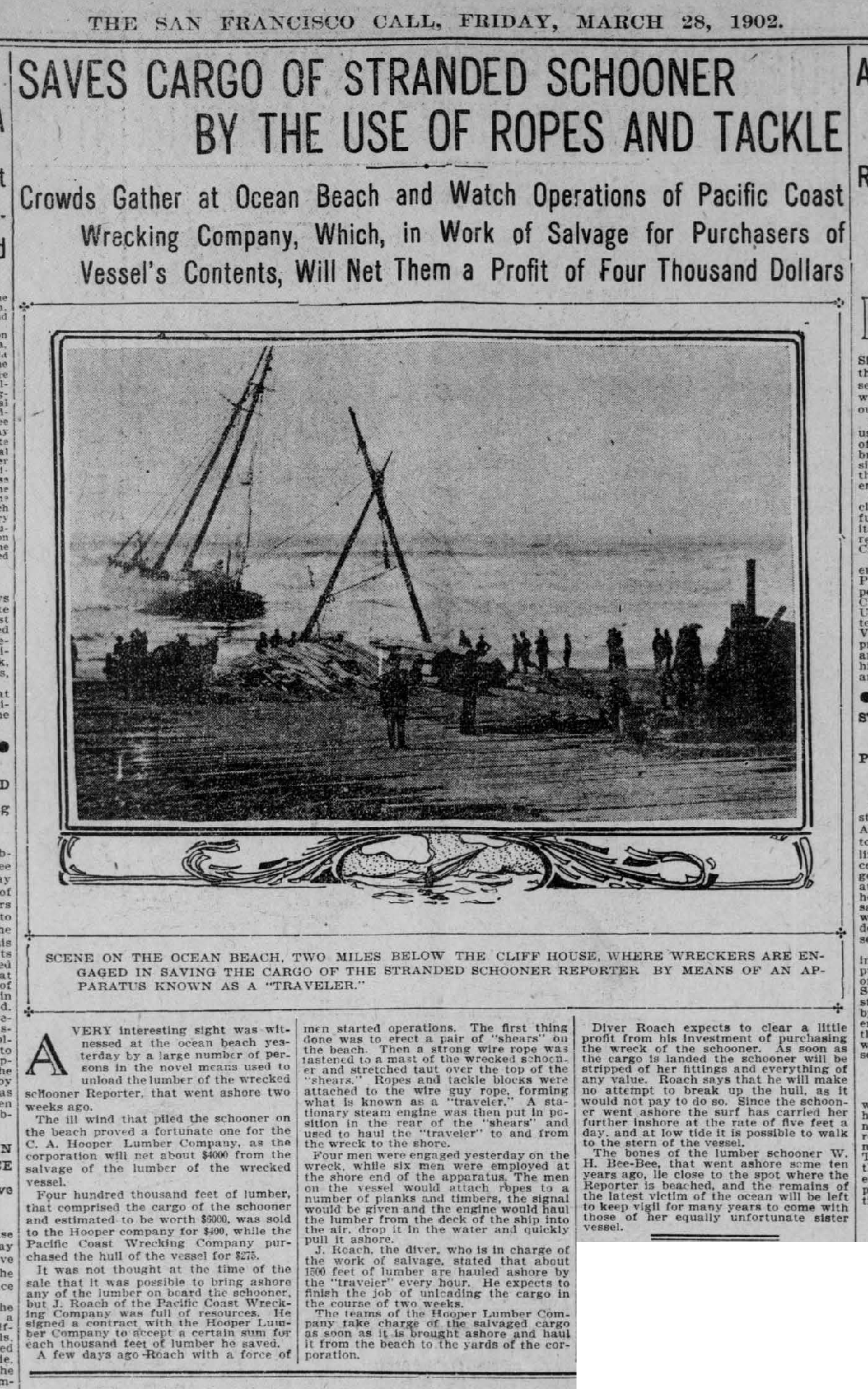 San Francisco Call - 28 March 1902
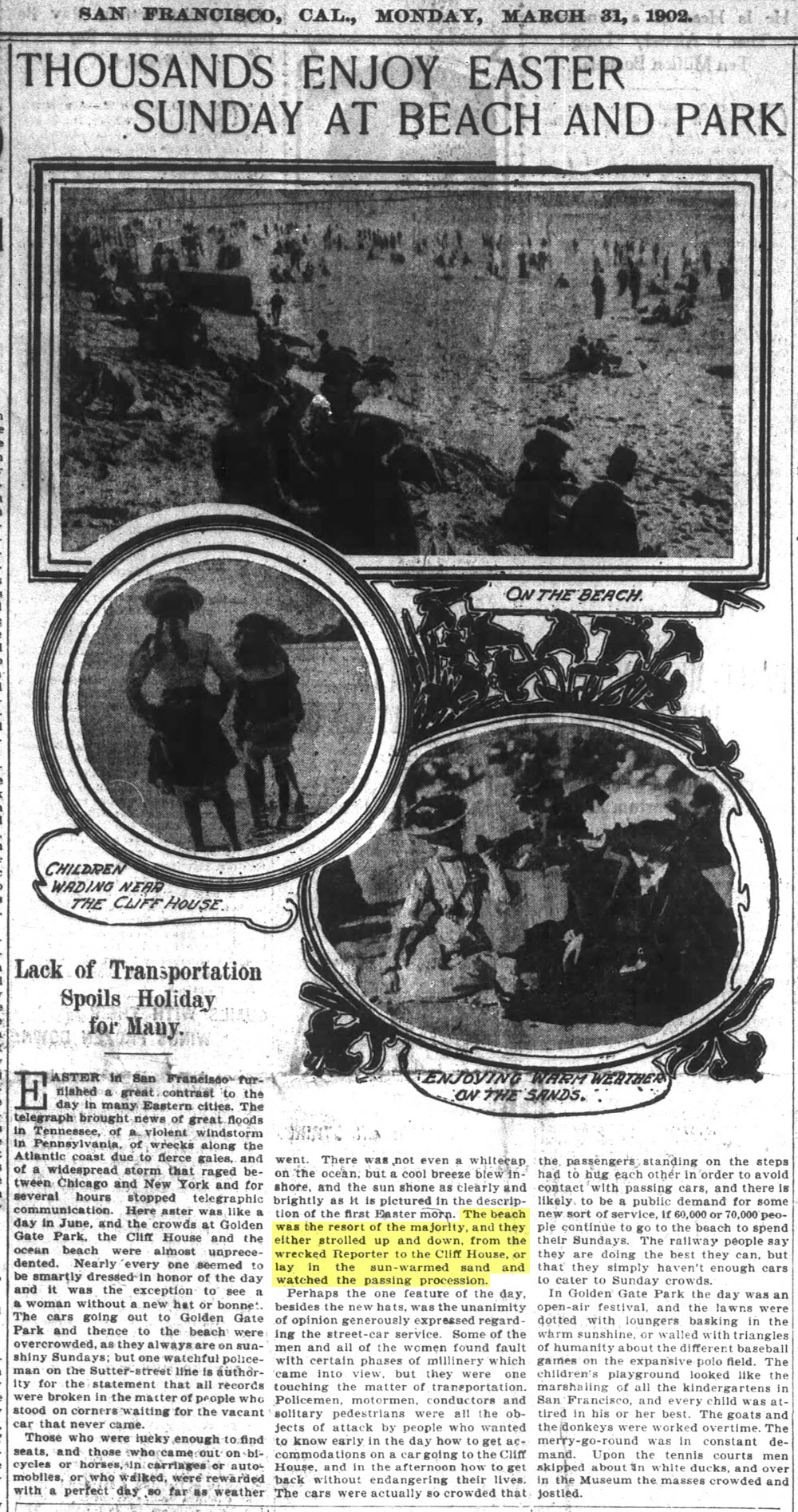 San Francisco Chronicle - Mar 31, 1902
|
|
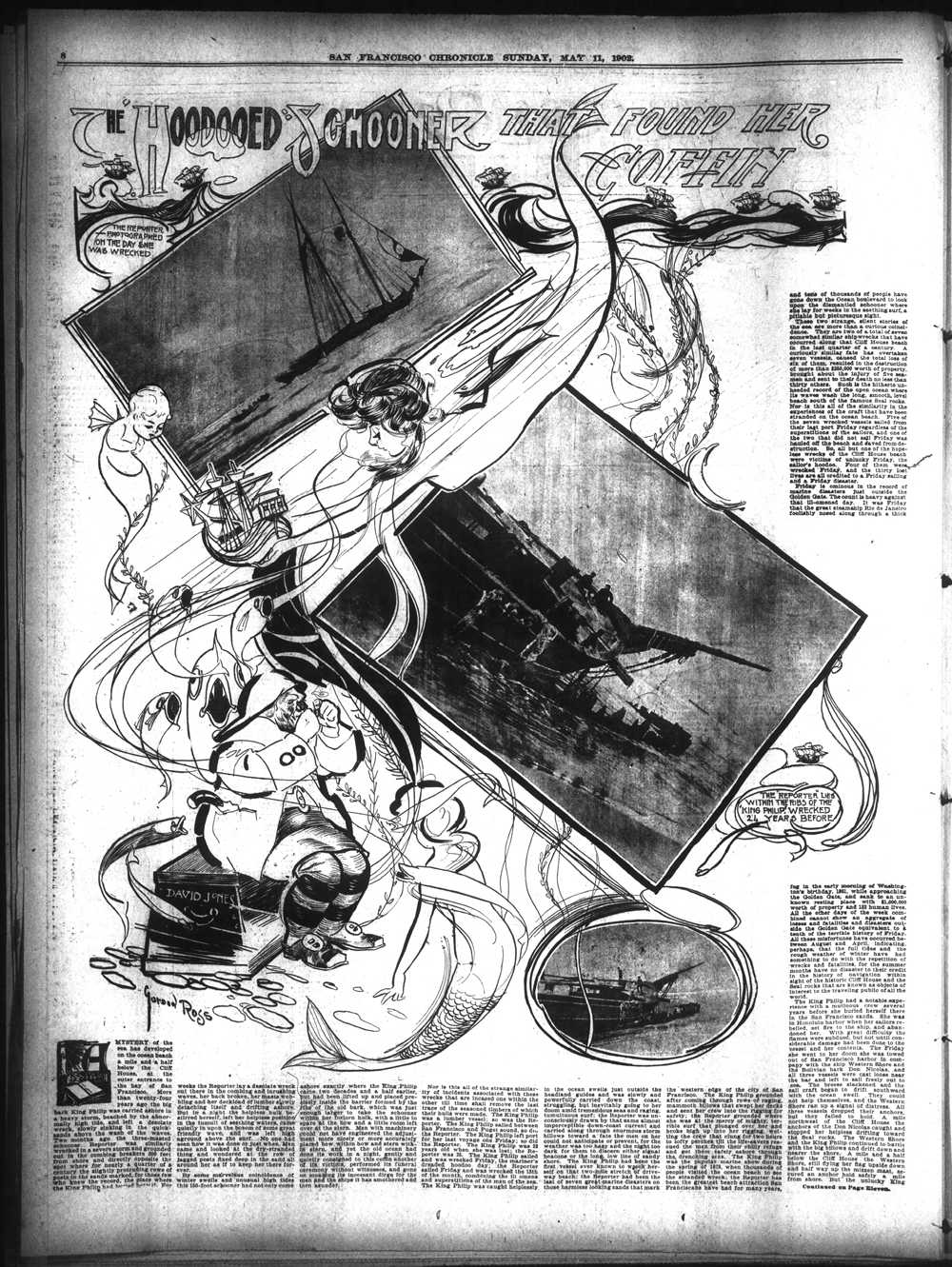
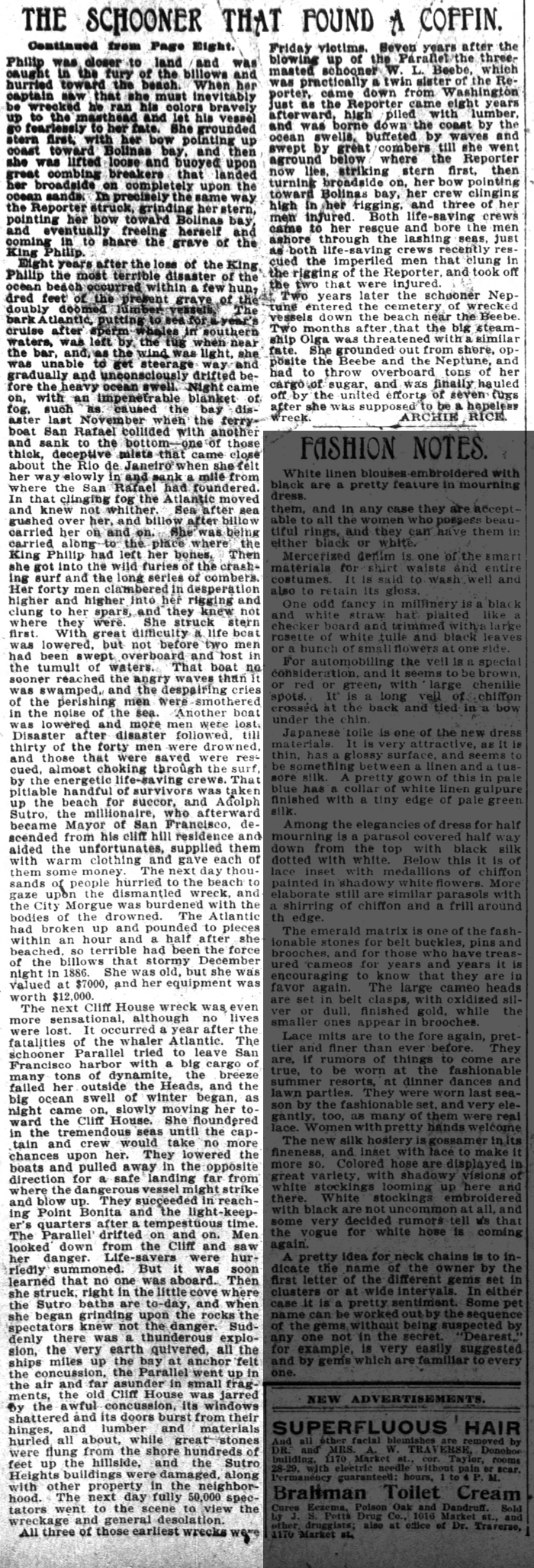
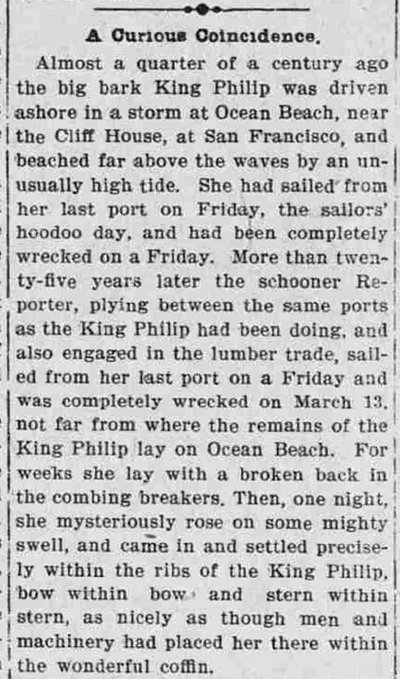 The Pacific Commercial Advertiser - October 28, 1902
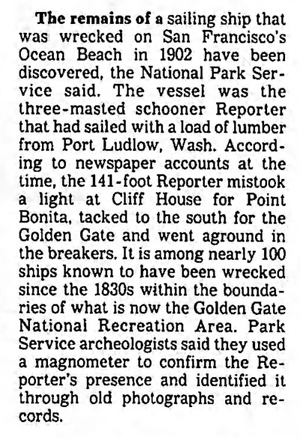 The Los Angeles Times - Jul 1, 1984.jpg
The 351-ton, three-masted schooner "Reporter" was built at Port Ludlow, Washington by the Hall Brothers, noted Pacific Coast shipbuilders, in 1876. "Reporter" spent its years sailing in the Pacific Coast lumber trade, bringing milled lumber, shingles, and pilings from small coastal logging ports to San Francisco. When lost, "Reporter's" managing owner was the E.K. Wood Lumber Company of San Francisco. After loading a cargo of four hundred thousand board feet of pine lumber, shingles, and shakes at Gray's Harbor, Washington, "Reporter" sailed for San Francisco in early March 1902. The crew grumbled about two bad omens: the ship sailed on a Friday, traditionally considered bad luck, and the ship's cat--who happened to be black--leaped overboard and drowned an hour before "Reporter" weighed anchor. The cook, a superstitious man, felt that "the poor thing committed suicide" rather than sail on a doomed ship. On the evening of March 13 "Reporter" neared the Golden Gate in a thick fog. In the dark, Capt. Adolph Hansen saw a strong light to starboard, which he took to be the lighthouse at Point Bonita. Allowing the vessel to drive ahead and pass the light to enter the Gate, Hansen found himself caught in the surf; "not until the schooner was in the breakers did he know he was trying to hurdle her over the peninsula instead of going in orderly through the harbor entrance." Hansen mistook a light at the Cliff House for Point Bonita Light, and "Reporter" struck Ocean Beach about three miles south of Point Lobos, beaching where the bark "King Philip" had gone ashore in 1878. Heavy seas swept the decks, forcing the crew up into the rigging. The mizzen-mast fell, injuring one man who fell to the deck. Capt. Hansen had meanwhile flashed a light as a distress signal, alerting a surfman from the Golden Gate Life-Saving Station who was patrolling the beach. Rescuers soon arrived and launched a surfboat to retrieve "Reporter's" crew. The surfboat swamped on the first attempt, but on the second try the crew was saved. Waves gradually pushed "Reporter" up on the beach, and by daylight the ship lay on its starboard side a hundred yards from shore. "During the day she heaved and lurched until she was lying almost stern on." According to the San Francisco "Examiner": There is no hope for "Reporter." Her cargo of lumber, worth $14,000, is likely to drift to the beach in parcels. It can be stacked and carted away into the city and so saved. The schooner can only fight till her tendons give. Her ribs and sheathing, masts and rails will wash ashore, to be carried away by thrifty seaside dwellers and be used as firewood. The schooner was visited by Capt. Hansen and the life-savers the day after the wreck, and the chronometer and a few personal effects were saved. Thousands of San Francisco residents visited the wreck, "and not even the biting wind and sudden squalls could keep them away." Enterprising businessmen posted broadsides on the hulk, "Boise Liniment" for rheumatism. The keel broken, "Reporter" began to fall apart and disappear beneath the sand, "fast digging her own grave alongside the bones of the "King Philip", whose ribs are still seen..." |