Construction
1895
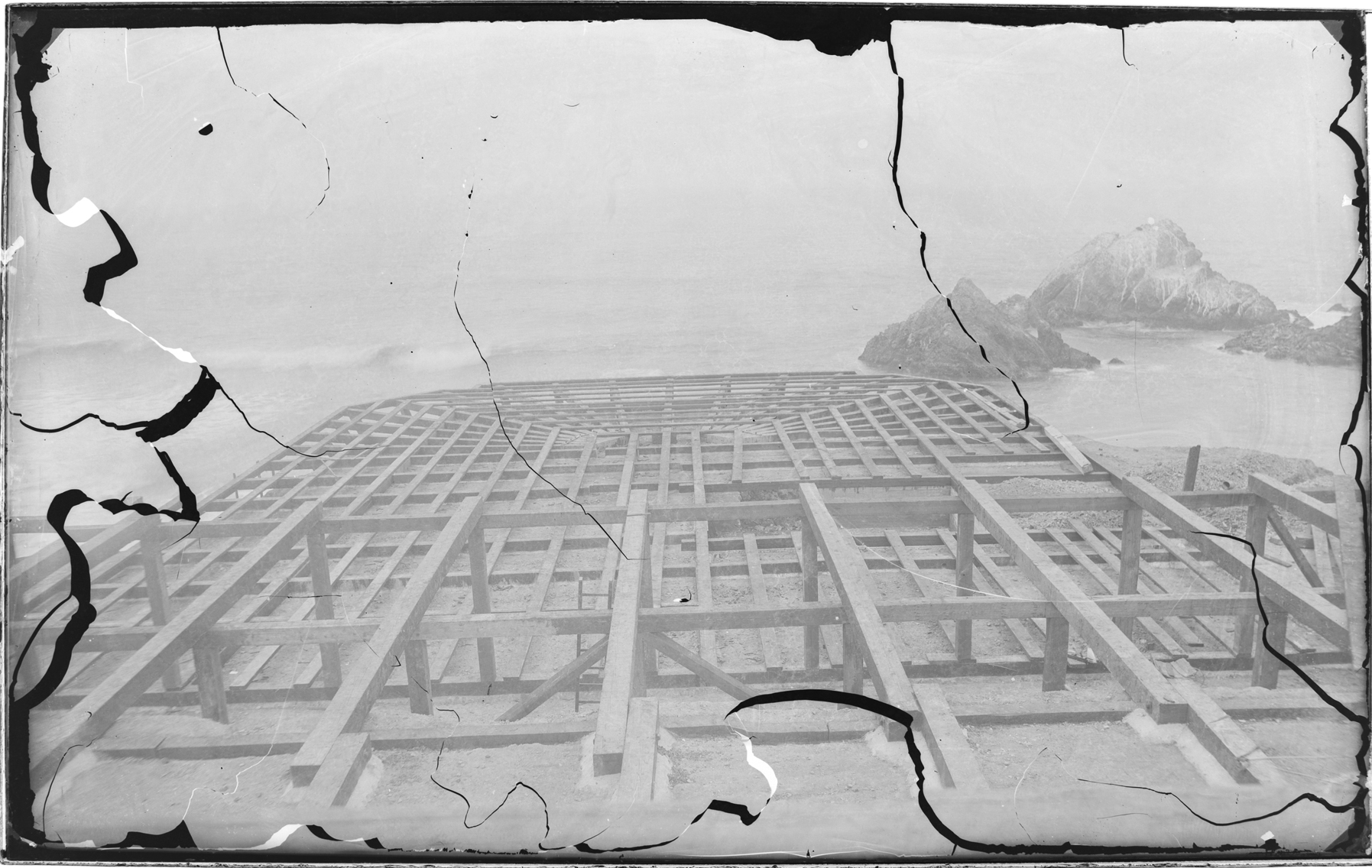
Glass negative showing foundation
Property of DeYoung Fine Arts Museum, San Francisco
(click here
for digitally restored version)
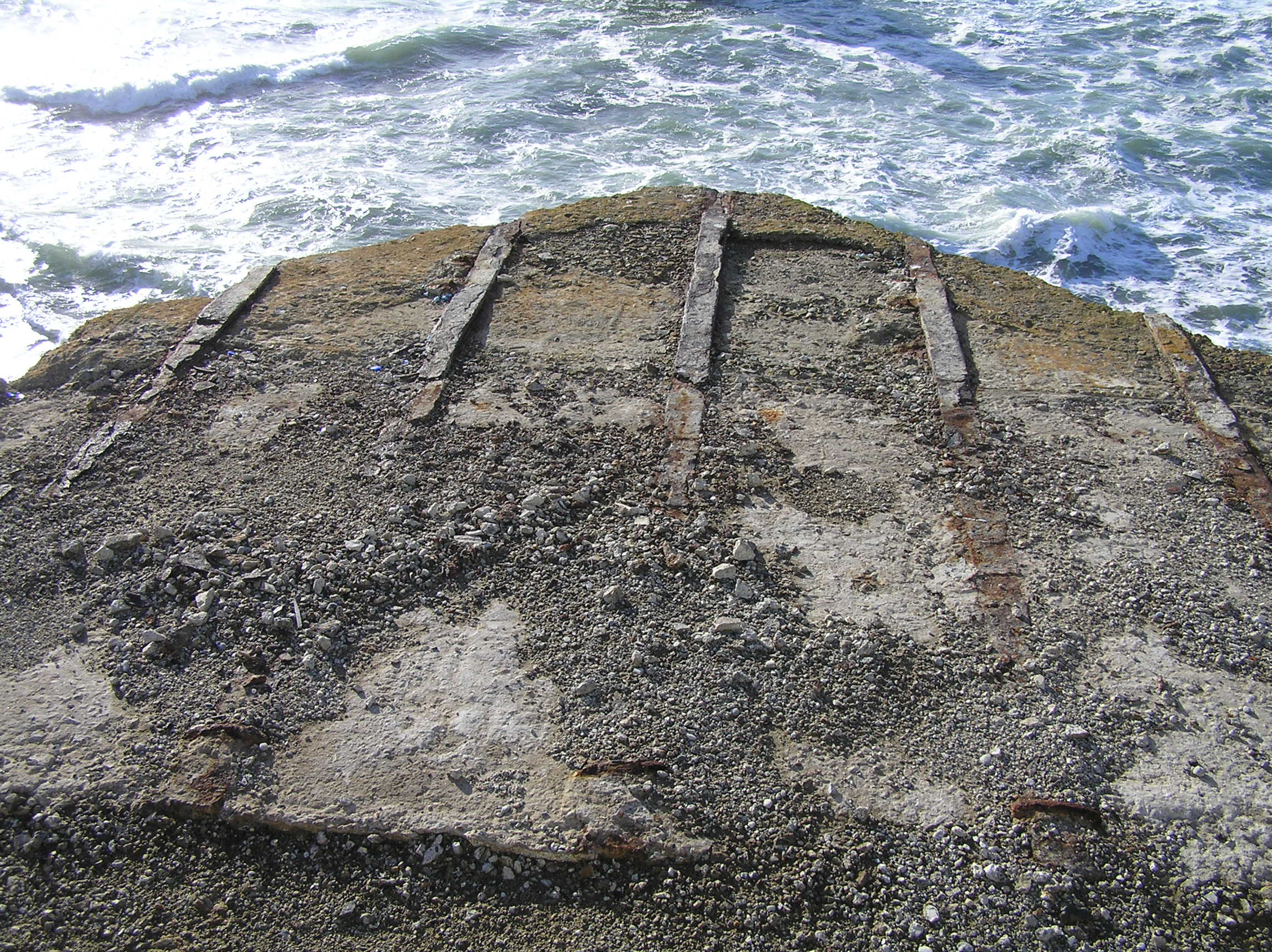
This structure on the cliff's edge is sometimes identified as the remains of the
Cliff House foundation. While that hasn't been ruled
out, it seems more reasonable that it was the support beams for a viewing
platform build around 1910. More info
here.

"View north to construction, with framing mostly complete. Seal Rock at
left."
Courtesy of Western Neighborhoods Project (link),
original source Marilyn Blaisdell Collection, Isaiah West Taber
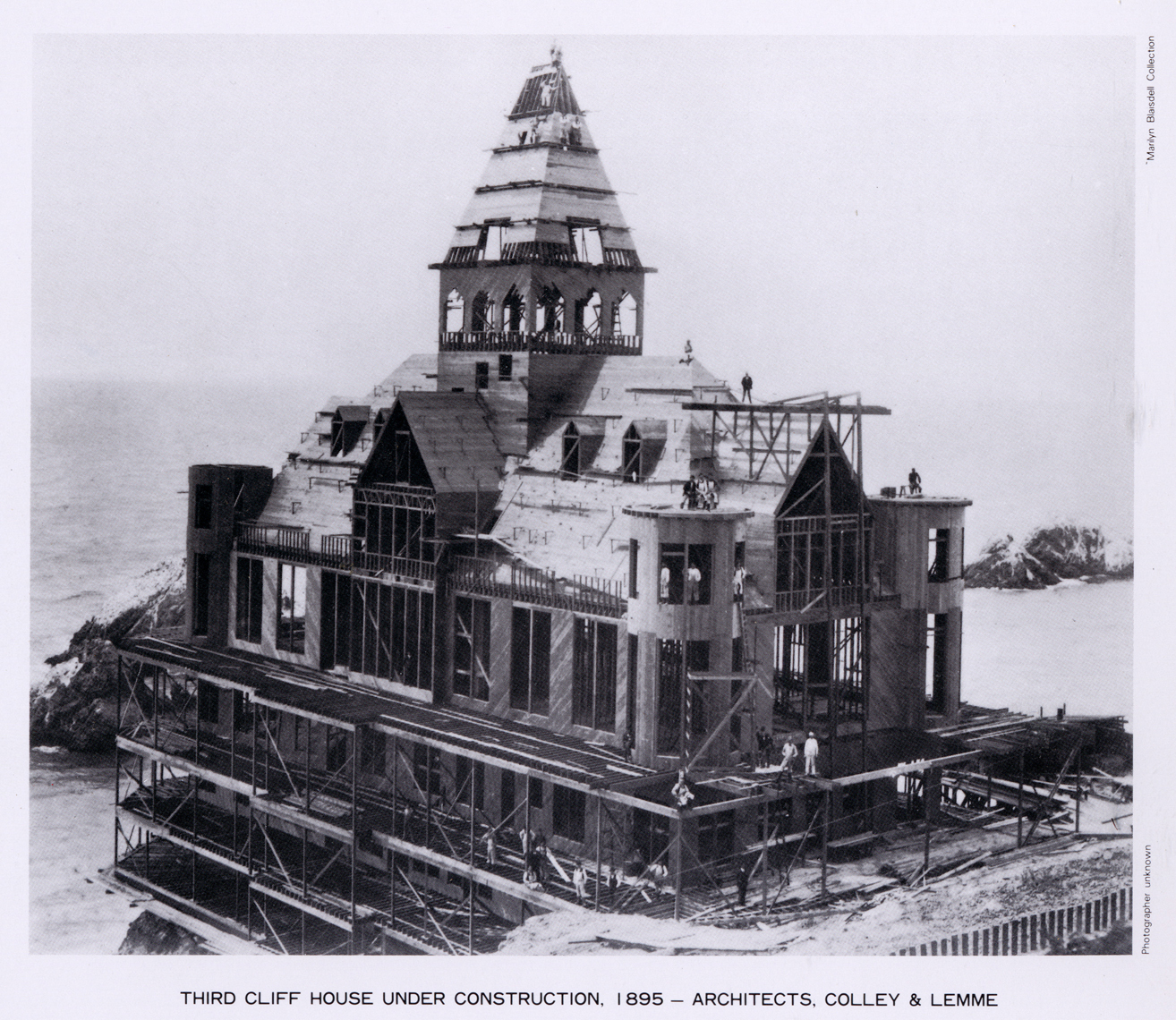

Cliff House nearing completion (WNPCHP)
|
The Cliff House was remodeled just
prior to the 1907 fire, so how do we know this is a photo of the
newly constructed Cliff House? |
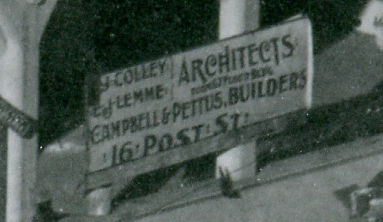
Note stickers on windows, construction sign (lower right, enlarged here)
|
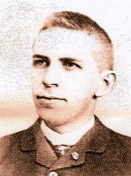
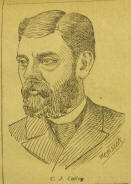
Architects Emil Lemme & Charles J. Colley
In 1895 (?) Sutro commissioned the architectural team of Charles J Colley and Emil S Lemme to design the new Cliff House; he had used them before, most notably on the Sutro Baths. In early August 1891, Sutro had advertised in the San Francisco Chronicle inviting designs for his proposed bathing establishment. He offered a “premium” of $500 to the winning design and set a deadline for the end of the month. In a letter to his mentor Professor Ricker, Lemme described how they won:
Sutro was likely an astute judge of a good design, being a successful self-educated engineer and inventor. His wealth came from the design and construction of the tunnels to drain the Comstock silver mines – a feat that many considered to be impossible. He was not afraid to go against the odds. Lemme went on to complete 150 or so working drawings. Colley acted as the project superintendent and was the main point of contact with Sutro. Prior to the Sutro Baths, the team of Colley and Lemme had won the competition for the Woodland City Hall & Fire station in Yolo County, California in 1890. Sutro was by far their most important client. Their partnership was relatively brief and appears to have been dissolved by 1895. Both Colley and Lemme came from the Midwest: Wisconsin and Iowa respectively: but had contrasting backgrounds. Colley had worked his way up through the trades. Lemme was a university-trained architect who had also studied structural engineering; a rare breed in those days. Researcher by: Desmond Smith desmo445@hotmail.com |
|
...By July 1895 construction was rapidly progressing. Immense loads of earth had been removed from the site and some twenty or more massive iron rods had been secured in the rock face with cement as supports for the structure's foundation. According to the San Francisco Call of July 10, 1895, the main building would be five stories high surmounted with spires and a tower twenty-seven feet square which was to serve as an observatory. Tourists could rise the eight floors from the basement to the top, some 200 feet above the ocean, by an elevator. The main floor, level with the road, would contain a large dining room, parlor, bar, and numerous private dining rooms, with necessary kitchens. The second floor would have about twenty private lunch rooms, as well as a large art gallery to exhibit many of the gems from Sutro's private collection. The third floor would provide a very complete photograph gallery, reception rooms, and parlors, with panoramic views of the shoreline from large circular windows. On the first floor below the road level, Sutro planned to reinstate a popular price concession area where tourists could lunch, buy shells from the curio man, and watch the seals, as was the custom in the old Cliff House. And in the basement the building's laundry, boilers, machinery, and rooms for employees would be installed. The furnishings for the rooms were going to be "elaborate and neat," and would provide the visitors with many settees and easy chairs in which to relax and enjoy the resort surroundings. Quotes from: "S.F. Morning Call," Dec. 27, 1894, p. 10 and July 10, 1895, p. 7; Cliff House, Bids, Offers, Contracts, 1894-96, Sutro Collection, Box 38, Misc. Payrolls and Bids, 1890-1907, Bancroft Library, Univ. of California, Berkeley, Cal.; "S.F. Morning Call," Dec. 31, 1894; "'Burning of the Cliff House' sold like Hot Cakes." "The Pony Express 21, No. 9, Feb. 1855, p. 2.) |
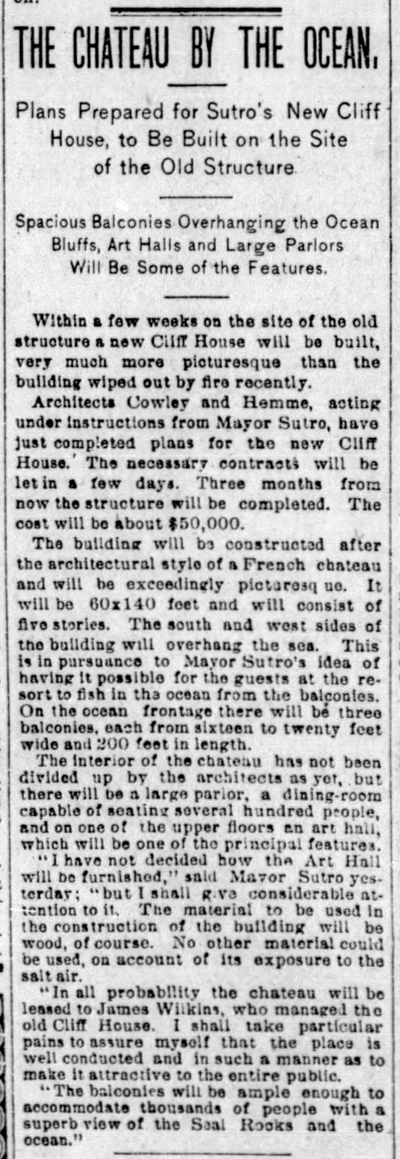
The San Francisco Examiner - Jan 25 1895
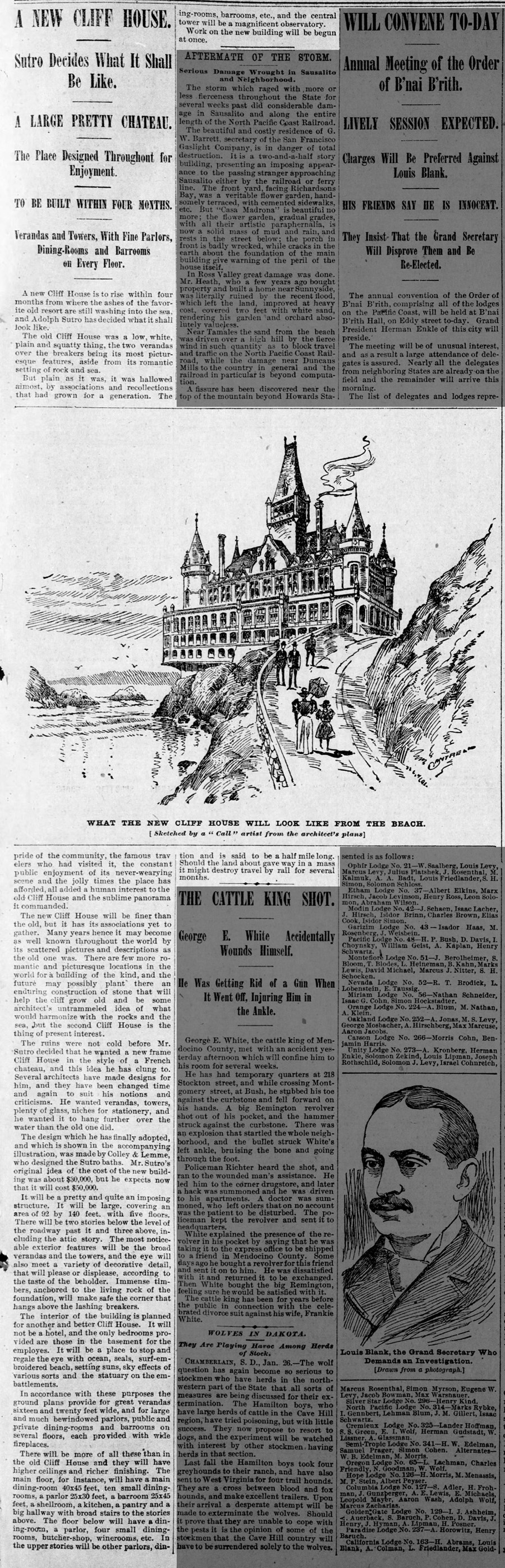
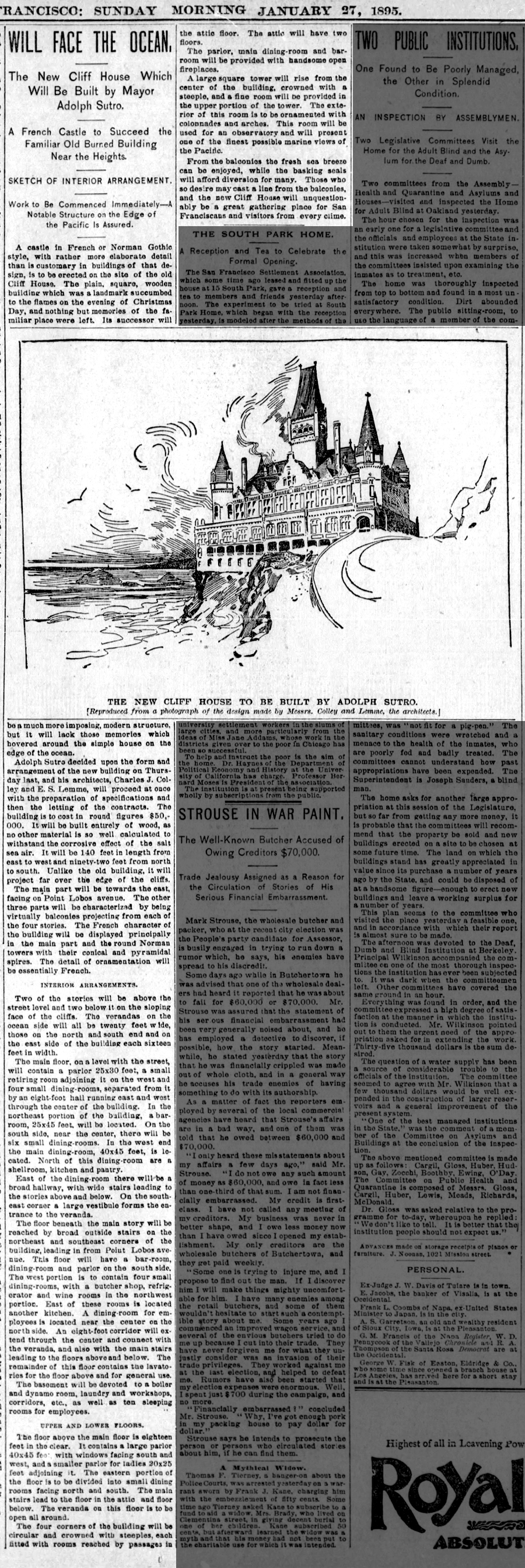
The San Francisco Call - Jan 27 1895, p7
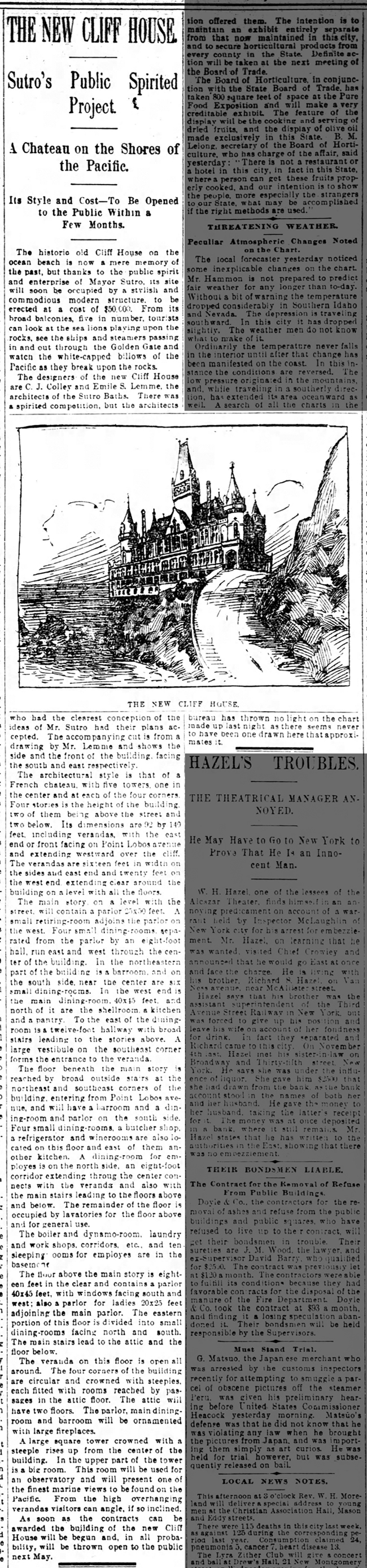
San Francisco Chronicle - Jan 27 1895
The San Francisco Examiner - Jan 27 1895, p16
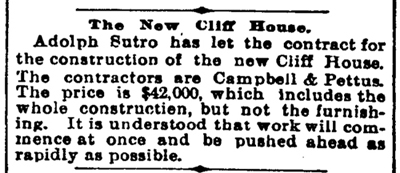
San Francisco Chronicle - 13 Apr 1895
"contractors are Campbell & Pettus"
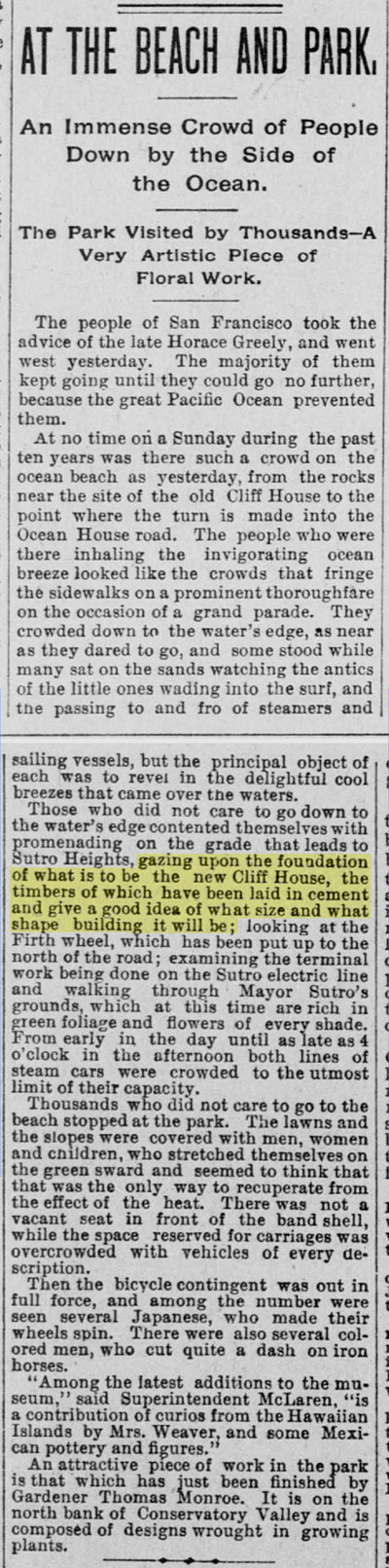
The San Francisco call - May 13, 1895
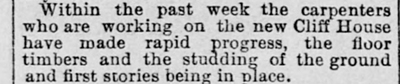
The San Francisco Call - Jun 3 1895
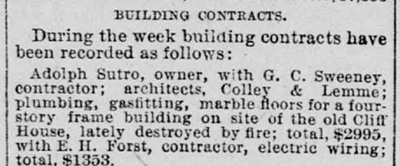
San Francisco Call - 17 June 1895
.jpg)
SF Call - 25 June 1895
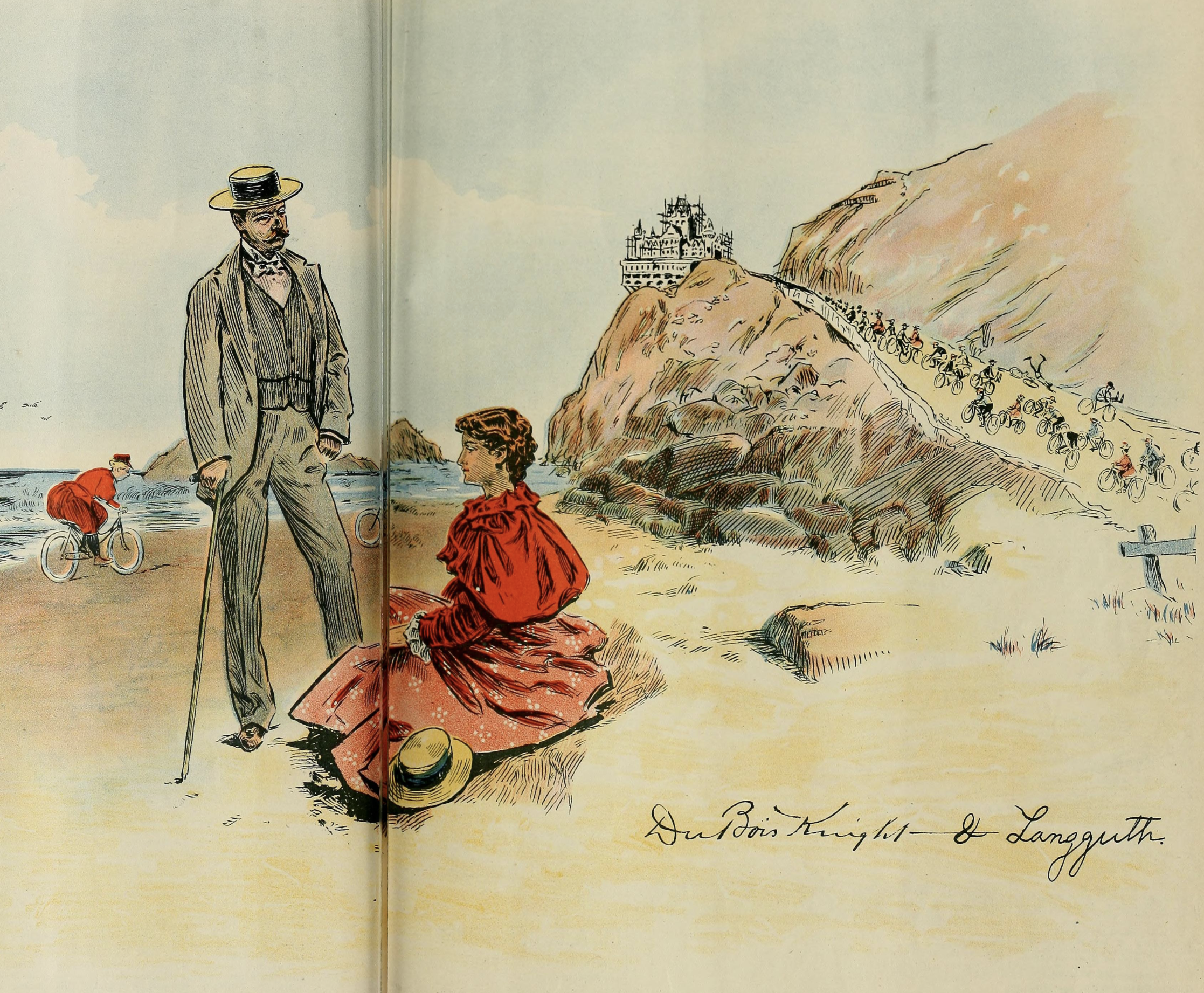
Cliff House, July 1895 "The Wasp" Magazine
Illustration showing Cliff House under construction
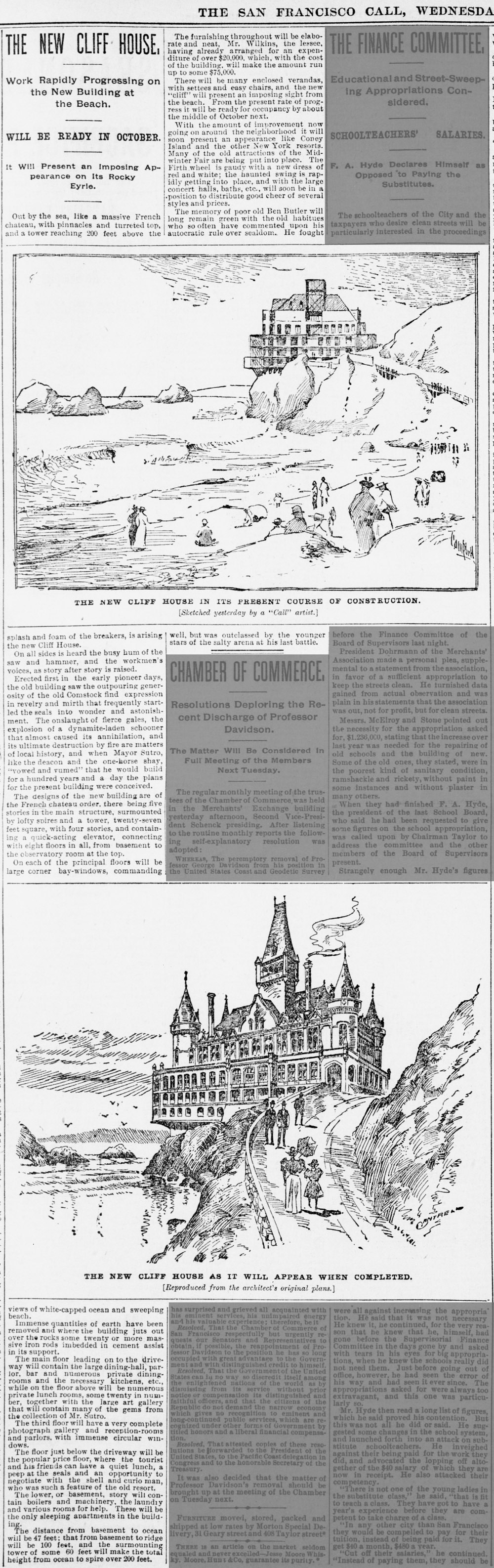
The San Francisco Call, Wednesday, 10
July 1895, pg 7
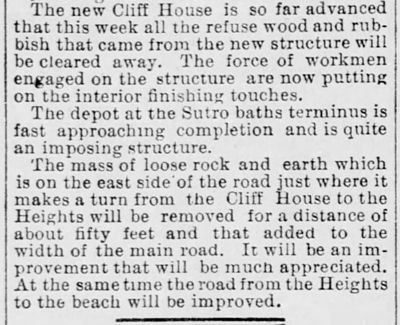
The San Francisco Call - Nov 25 1895

San Francisco Chronicle - Dec 20, 1895
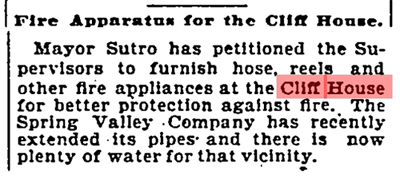
San Francisco Chronicle - 29 Feb 1896
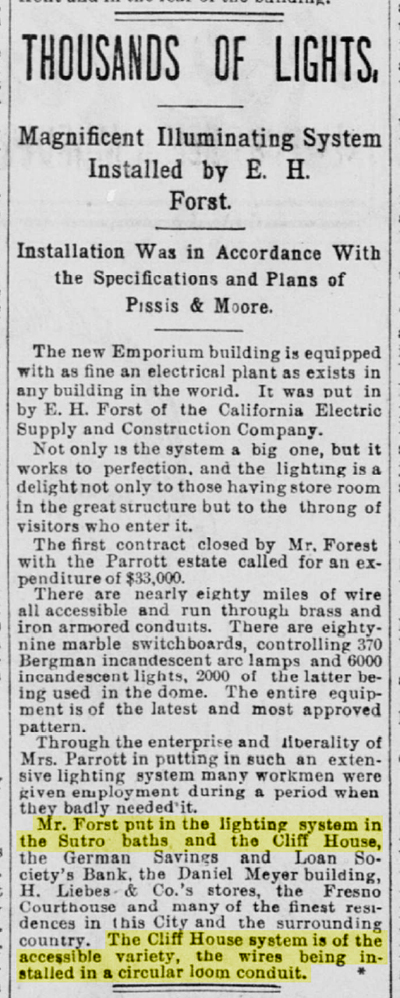
Cliff House Lighting
The San Francisco Call - 24 May 1896